
Pathview Wealth Advisors continues to see rising interest in the fire movement, particularly among professionals who want greater control over their time, careers, and financial decisions. FIRE—short for Financial Independence, Retire Early—is not about quitting work at a certain age. Instead, it centers on reaching financial independence so work becomes optional rather than mandatory.
For many people, the fire movement isn’t about full retirement. It’s about flexibility, reduced stress, and the ability to choose how and when to work. That distinction matters—and it shapes how a FIRE plan should be built.
What the FIRE Movement Looks Like in Practice
At its core, the fire movement focuses on building assets that can support your lifestyle without relying on earned income. However, there is no single version of FIRE.
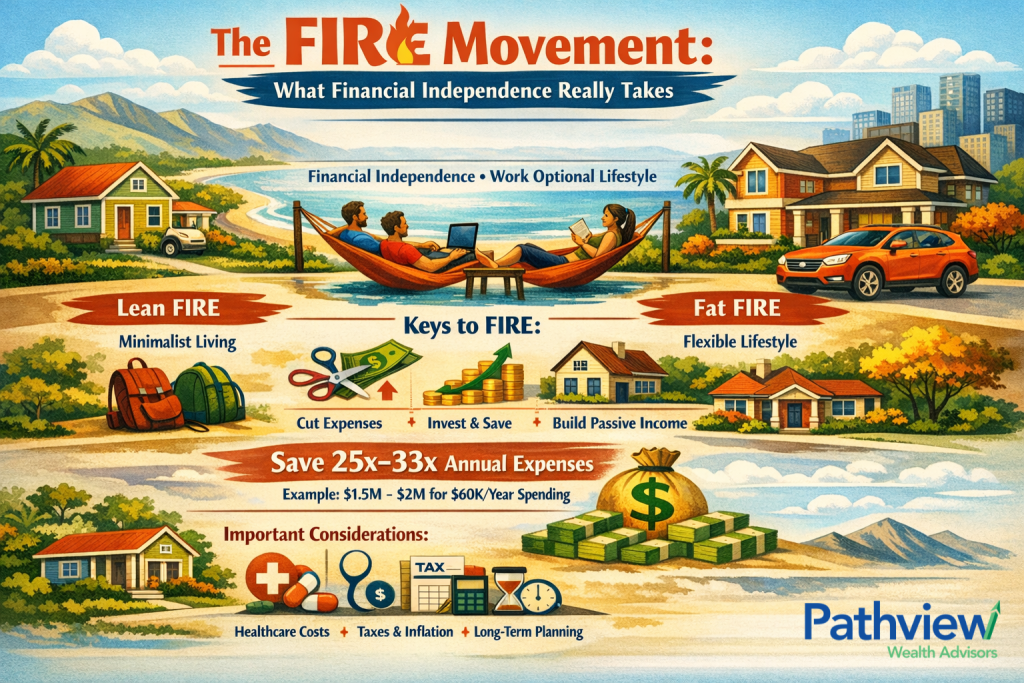
Some pursue a minimalist approach often called Lean FIRE, which emphasizes lower spending. Others target Fat FIRE, maintaining higher ongoing expenses and lifestyle flexibility. The common denominator is intentionality—spending and saving in alignment with clearly defined priorities.
Working with a fee only fiduciary and CFP®+CPA team with a tax-first approach helps ensure that FIRE planning stays grounded in realistic assumptions, risk management, and long-term sustainability.
How People Pursue Financial Independence
The fire movement typically relies on two fundamentals:
- Strong control over spending and debt
- Consistent accumulation of income-producing assets
Most FIRE strategies involve diversified investment portfolios, real estate, business ownership, or other long-term assets. At Pathview Wealth Advisors, our independent fee only wealth management model integrates investment strategy with tax-first decision-making and proactive tax planning—critical components for those targeting early financial independence.
How Much Do You Need for FIRE?
A common benchmark in the fire movement is accumulating 25x to 33x annual expenses before stepping away from full-time work.
For example, a household spending $60,000 per year may target $1.5 to $2 million in investable assets. These are guidelines, not guarantees. Actual outcomes depend on market conditions, withdrawal strategy, inflation, and coordination with a qualified tax and financial advisor.
Important Costs Often Overlooked
FIRE plans frequently underestimate:
- Health insurance before Medicare
- Taxes on withdrawals across different account types
- Lifestyle spending that increases with more free time
- Inflation over long time horizons
Addressing these factors early improves durability and reduces unpleasant surprises later.
Is the FIRE Movement Right for You?
The fire movement isn’t for everyone—but its principles apply broadly. Spending less than you earn, investing early, and planning intentionally can improve financial outcomes at any stage of life.
Pathview Wealth Advisors works with clients in San Diego and nationwide to evaluate FIRE goals realistically and design tax-aware strategies that support long-term flexibility and peace of mind.
If you’re exploring the fire movement or want to understand how close you are to financial independence, Pathview Wealth Advisors can help you plan with clarity and confidence. Contact us today.
This content is for educational purposes only and is not investment, tax, or legal advice. Investing involves risk, including possible loss of principal. Consult your own financial or tax professional before making decisions.
Financial independence means your investments and assets can generate enough income to cover your living expenses without relying on a paycheck.
A common guideline is to save 25× to 33× your annual expenses, based on a sustainable withdrawal rate. For example, $80,000 in annual spending may require approximately $2 million in investable assets.
The 4% rule suggests you can withdraw about 4% of your investment portfolio each year in retirement while maintaining a high probability that your savings will last long term.
– Lean FIRE focuses on early retirement with lower spending and a minimalist lifestyle
– Fat FIRE targets higher spending and greater flexibility, requiring a larger portfolio
The main difference comes down to lifestyle and annual spending goals.
FIRE can be realistic for individuals who maintain a high savings rate, control spending, and invest consistently. However, outcomes depend on income, market conditions, and long-term discipline.
Common risks include:
– Underestimating healthcare costs before Medicare
– Market downturns affecting portfolio sustainability
– Inflation reducing purchasing power over time
These factors can impact long-term financial independence if not planned for properly.
No. Many people pursue financial independence without fully retiring. The goal is flexibility—being able to choose whether and how you work.
Taxes can significantly impact withdrawal strategies, especially when drawing from taxable accounts, IRAs, or employer retirement plans. Coordinating withdrawals across account types helps improve tax efficiency and preserve long-term assets.
FIRE plans commonly rely on diversified portfolios that may include stocks, bonds, index funds, real estate, or business ownership—focused on long-term growth and income generation.
People pursuing FIRE often retire before Medicare eligibility, which means they must plan for private health insurance costs that can significantly affect their financial plan.
No. While higher income can accelerate FIRE, the movement emphasizes savings rate and spending discipline, not just earnings. Many individuals reach financial independence by aligning lifestyle and financial priorities.
The timeline varies widely based on savings rate, investment returns, and lifestyle costs. Higher savings rates can dramatically shorten the time required to reach financial independence.
One of the most common mistakes is underestimating:
– Taxes
– Healthcare costs
– Future lifestyle spending
Overlooking these can make early retirement less sustainable than expected.
No. FIRE requires disciplined saving and long-term commitment. However, many of its principles—spending intentionally and investing early—can benefit anyone, regardless of retirement goals.
Working with a fee-only fiduciary who integrates investment strategy with tax planning can help you build a more durable FIRE plan, reduce tax inefficiencies, and stress-test assumptions over time.